Semelism
(from Latin semel – “once,” “one-time,” “only in this moment”) is a new philosophical movement focusing on the essence of Nothingness and its influence on the individual. Its aim is the path of recognizing and accepting what Nothing is, through which a person can attain the ability to create everything.

What does Nothing mean?
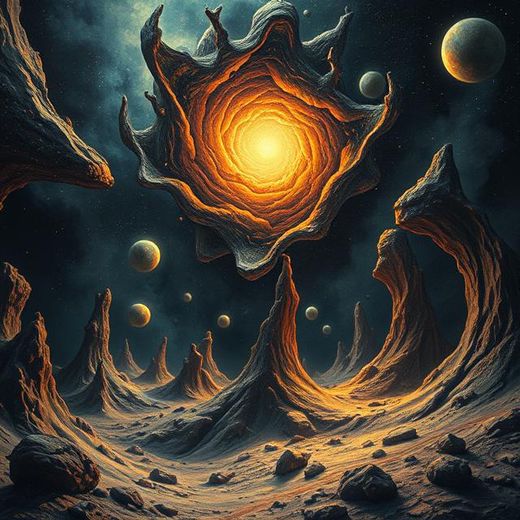
Nothing is pure emptiness, without form, without place, and without intention. It is neither a thing nor a phenomenon, but a state of nonexistence that nevertheless conceals within itself the seed of everything. Nothing is the invisible foundation from which being arises and to which all shall one day return. It is a beginning without a beginning, a question without an answer, and an answer that precedes the question. In Nothing, the paradox is reflected: that which does not exist is at the same time the inexhaustible potential of existence. To truly understand Nothing means to embrace its elusiveness. The acceptance of Nothingness teaches us that everything we know is only a temporary form carved out of emptiness. Nothing surrounds us, shapes the boundaries of our knowledge, and reminds us of finitude, yet at the same time it opens the way to infinite possibilities.
- Nothing works with time as a unit of change.”
- We may substitute Nothing with other names, yet it always refers to something that does not think and does not exist.
- To accept Nothing means to accept one’s own finitude.

The Foundation of Semelism
Semelism is based on these core pillars.
- Origin: In the beginning, there was Nothing. Everyone and everything originates from Nothing. And in the end, everything returns to Nothing.
- Source: Nothing is an unknown element that opens up infinite potential for us. By understanding what Nothing is, we gain the ability to create everything, even without using material means.
- Naturalness: There is no supernatural entity or force. All supernatural phenomena serve only to explain the unknown or to exert control and manipulation.
- Goodness: The act of doing good has value in itself. Any effort to do good with the expectation of a reward is incomplete.
- Determination: Randomness is an illusion. Every outcome is the result of a continuous chain of events, which is unique and inevitable.
- Uniqueness: Everything happens only once. There is no thing, mechanism, or event that repeats.
- Equality: The unique attempt of another is just as valuable as your own.
- Legacy: Live in such a way that others can also fully experience their one and only attempt.
- Finiteness: That which has a beginning also has an end. It is necessary to accept finiteness and the return to Nothing.